
We provide personalized, whole-body treatment plans incorporating a variety of life skills including fine motor, gross motor, primitive reflexes, development, play, vision, sensory processing, communication, social, and self-care. The treatment techniques we offer will enhance your child's level of function and the quality of their daily activities.
Our therapists strive to empower children and families with the tools and knowledge needed to integrate therapeutic interventions into everyday life. Our mission is to provide an individualized, whole-body approach to evidence-based rehabilitation for improved function through therapy, play, and education.
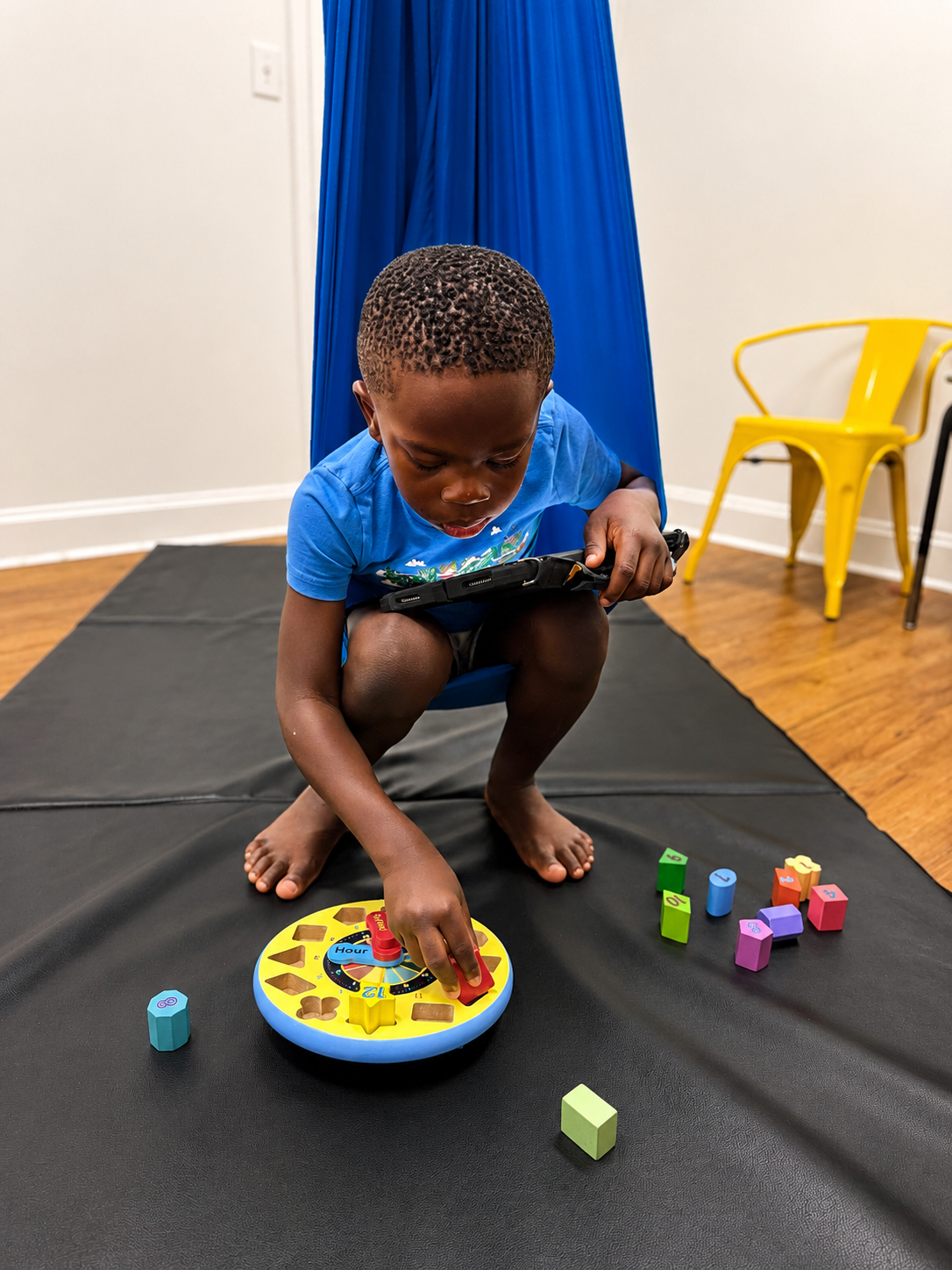
Is your child constantly "on the go," struggling with attention, emotional regulation, handwriting, coordination, reading, or learning new skills? Do they seem bright but have difficulty getting their body and brain to work together? Are everyday tasks taking more effort than they should?
Many challenges with learning, behavior, coordination, attention, and self-regulation can be linked to how efficiently the nervous system is processing and integrating information. At Flourish Integrative Therapy, we specialize in identifying underlying factors such as retained primitive reflexes, motor planning difficulties, immature movement patterns, poor body awareness, and gaps in whole-brain communication that may be impacting your child's success. Rather than focusing only on symptoms, we work to strengthen the foundational skills that support efficient movement, learning, attention, emotional regulation, and independence. Through individualized occupational therapy interventions, we help children build stronger connections between the body and brain so they can move, learn, and participate in daily life with greater confidence and success.
Does your child struggle with handwriting, coloring, cutting, buttoning clothes, tying shoes, opening containers, or using utensils? Do they seem awkward when using their hands or avoid activities that require precision and coordination?
Fine motor skills involve the small muscles of the hands and fingers that allow children to complete everyday tasks with control and accuracy. Strong fine motor skills depend on more than just the hands—they also require good shoulder strength and stability, core strength, coordination between both sides of the body, visual processing skills, and the ability to coordinate what the eyes see with what the hands do. Occupational therapy can help children develop the foundational skills needed for improved handwriting, self-care independence, classroom performance, and confidence in daily activities.
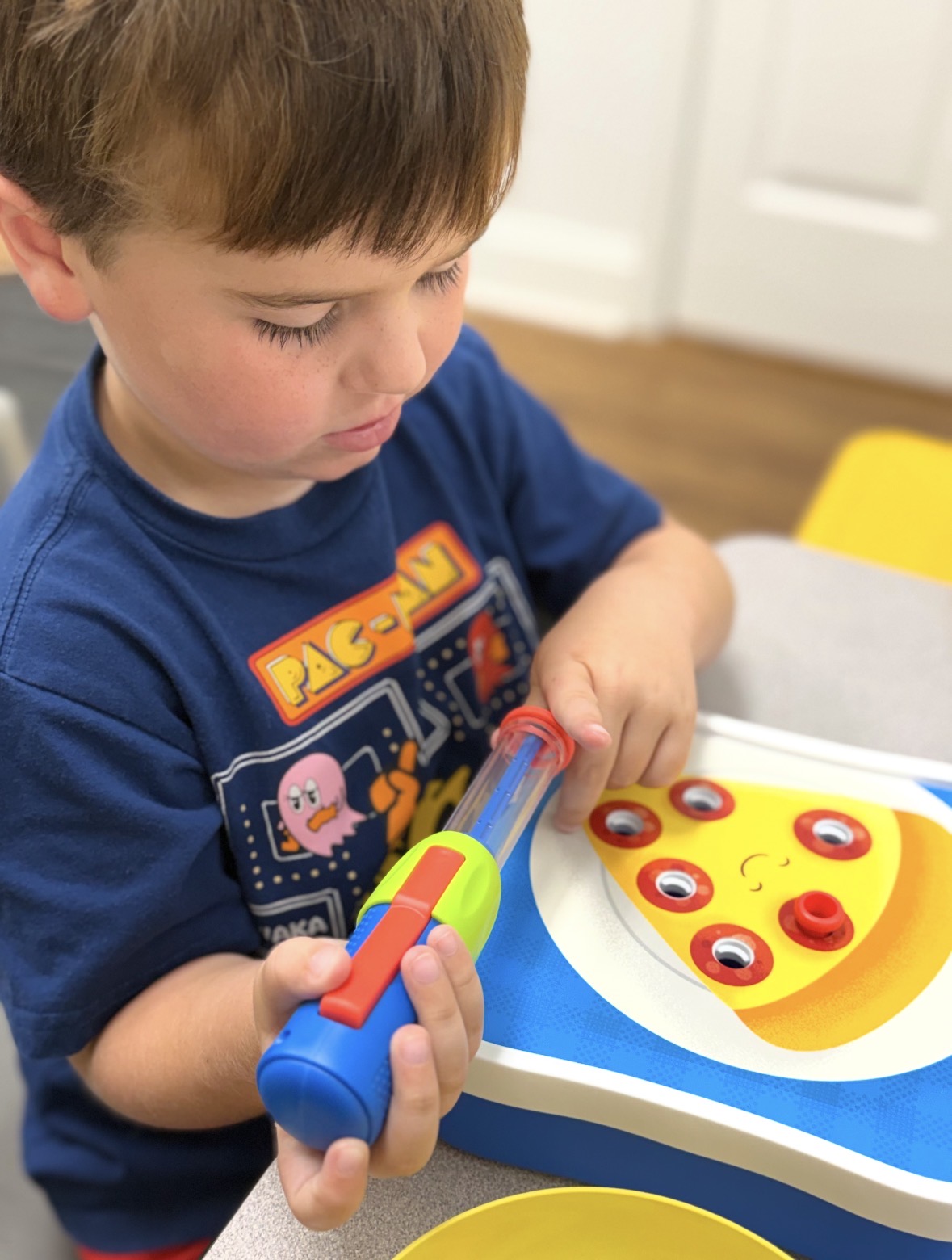

Does your child lose their place while reading, skip words or lines, complain that words move on the page, struggle to catch a ball, avoid reading, rub their eyes frequently, complain of headaches, or have difficulty copying from the board? Do they seem to know what they want to do but have trouble getting their eyes and hands to work together?
Vision is much more than seeing clearly. Efficient visual skills require the eyes and brain to work together to track moving objects, focus at different distances, coordinate both eyes as a team, process visual information, and guide the hands during everyday tasks. Difficulties with visual processing can impact reading, handwriting, sports, attention, classroom performance, and independence with daily activities. Occupational therapists can assess for visual-motor and visual perceptual challenges, identify how these difficulties affect function, and provide targeted interventions to improve eye-hand coordination, visual tracking, visual memory, visual perception, and overall visual efficiency. When appropriate, occupational therapists may also recommend referral to a developmental optometrist for further evaluation of underlying vision concerns.
Does your child have difficulty following directions, staying focused, completing tasks, managing emotions, organizing materials, transitioning between activities, or keeping up with classroom expectations? Do homework, routines, or daily tasks require frequent reminders and support from adults?
Success at home, school, and in the community requires much more than academic skills. Children need strong attention, self-regulation, executive functioning, motor coordination, visual processing, social skills, and independence with daily routines to manage everyday demands. Difficulties in these areas can affect learning, behavior, confidence, and participation across settings. Occupational therapy can help children develop skills such as attention, emotional regulation, task initiation, working memory, organization, problem-solving, handwriting, and independence with daily routines, helping them become more confident, successful, and independent in their everyday lives.


Does your child constantly seek movement, crash into things, fidget, chew on objects, make noises, or have trouble sitting still? Are they easily overwhelmed by sounds, clothing textures, grooming activities, busy environments, or changes in routine? Do they seem to have "big reactions" to everyday experiences that don't bother other children?
Children take in sensory information from their bodies and the world around them every second of the day. When the brain has difficulty organizing and responding to this information, it can affect attention, emotional regulation, behavior, motor skills, learning, sleep, eating, and participation in daily activities. Occupational therapy can help identify your child's unique sensory needs and develop strategies to improve regulation, attention, body awareness, and participation in everyday routines. Treatment may include movement-based activities, sensory-rich experiences, environmental modifications, and individualized sensory strategies designed to help your child feel more organized, focused, and successful throughout the day.
At Flourish Integrative Therapy, sensory-based activities are thoughtfully incorporated into treatment as one tool among many to support each child's overall development. Because every child responds differently to sensory input, therapy is individualized and adjusted based on your child's specific strengths, challenges, and goals.
Is your child accident-prone or struggling to keep up with peers during sports and playground activities? Do they have difficulty learning new movement skills such as riding a bike, catching a ball, maintaining balance, or coordinating their body during everyday activities?
Gross motor skills are the foundation for coordinated movement and involve using the body's large muscle groups to complete activities such as running, jumping, climbing, balancing, throwing, catching, and participating in sports. These skills also rely on strong body awareness, coordination between the right and left sides of the body, muscle strength, posture, balance, and visual-motor integration. Occupational therapy can help children develop the foundational skills needed for improved coordination, confidence, participation in physical activities, and success in everyday tasks at home, school, and in the community.
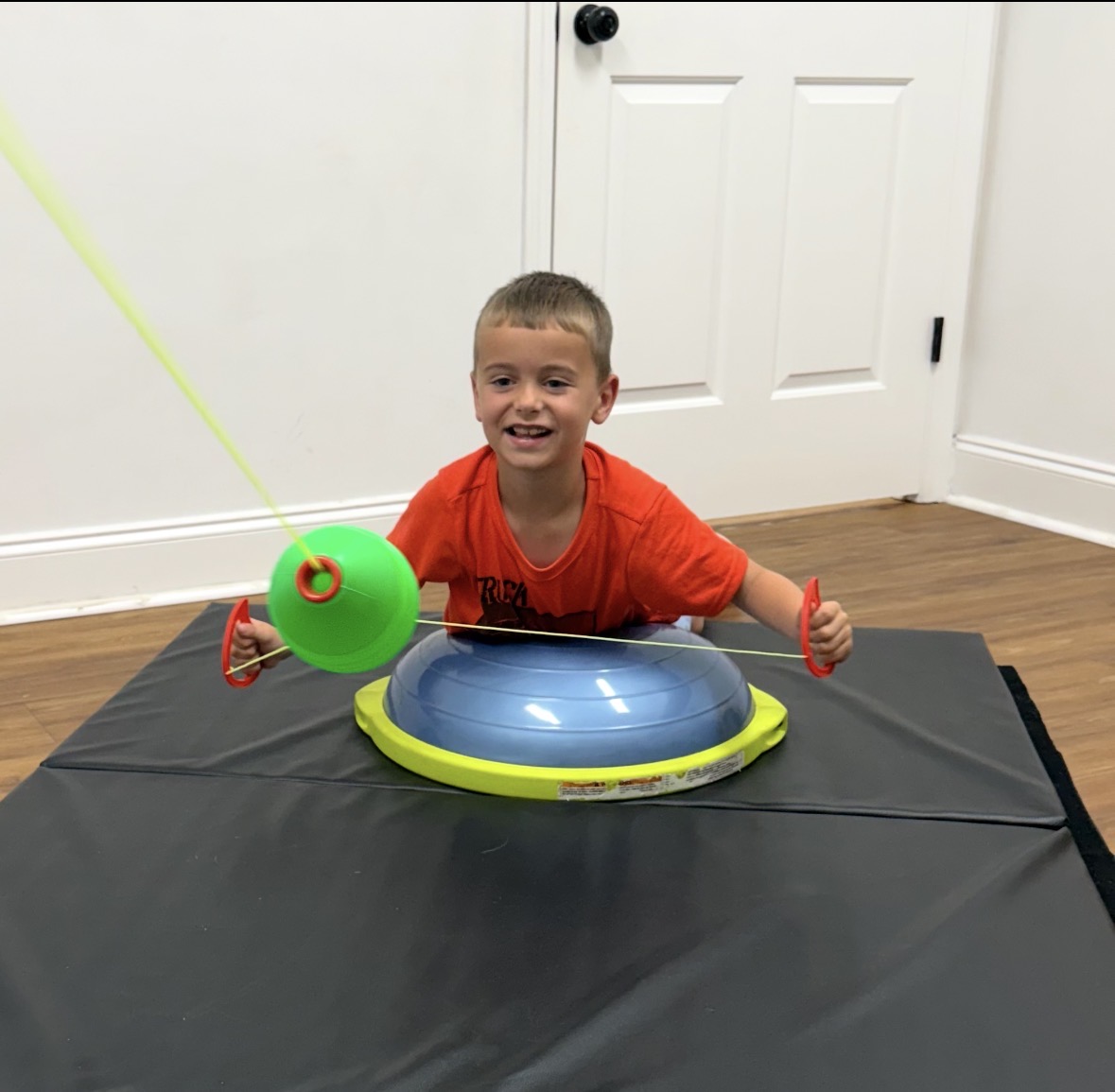
Is your child constantly "on the go," struggling with attention, emotional regulation, handwriting, coordination, reading, or learning new skills? Do they seem bright but have difficulty getting their body and brain to work together? Are everyday tasks taking more effort than they should?
Many challenges with learning, behavior, coordination, attention, and self-regulation can be linked to how efficiently the nervous system is processing and integrating information. At Flourish Integrative Therapy, we specialize in identifying underlying factors such as retained primitive reflexes, motor planning difficulties, immature movement patterns, poor body awareness, and gaps in whole-brain communication that may be impacting your child's success. Rather than focusing only on symptoms, we work to strengthen the foundational skills that support efficient movement, learning, attention, emotional regulation, and independence. Through individualized occupational therapy interventions, we help children build stronger connections between the body and brain so they can move, learn, and participate in daily life with greater confidence and success.
Does your child struggle with handwriting, coloring, cutting, buttoning clothes, tying shoes, opening containers, or using utensils? Do they seem awkward when using their hands or avoid activities that require precision and coordination?
Fine motor skills involve the small muscles of the hands and fingers that allow children to complete everyday tasks with control and accuracy. Strong fine motor skills depend on more than just the hands—they also require good shoulder strength and stability, core strength, coordination between both sides of the body, visual processing skills, and the ability to coordinate what the eyes see with what the hands do. Occupational therapy can help children develop the foundational skills needed for improved handwriting, self-care independence, classroom performance, and confidence in daily activities.
Does your child lose their place while reading, skip words or lines, complain that words move on the page, struggle to catch a ball, avoid reading, rub their eyes frequently, complain of headaches, or have difficulty copying from the board? Do they seem to know what they want to do but have trouble getting their eyes and hands to work together?
Vision is much more than seeing clearly. Efficient visual skills require the eyes and brain to work together to track moving objects, focus at different distances, coordinate both eyes as a team, process visual information, and guide the hands during everyday tasks. Difficulties with visual processing can impact reading, handwriting, sports, attention, classroom performance, and independence with daily activities. Occupational therapists can assess for visual-motor and visual perceptual challenges, identify how these difficulties affect function, and provide targeted interventions to improve eye-hand coordination, visual tracking, visual memory, visual perception, and overall visual efficiency. When appropriate, occupational therapists may also recommend referral to a developmental optometrist for further evaluation of underlying vision concerns.
Does your child have difficulty following directions, staying focused, completing tasks, managing emotions, organizing materials, transitioning between activities, or keeping up with classroom expectations? Do homework, routines, or daily tasks require frequent reminders and support from adults?
Success at home, school, and in the community requires much more than academic skills. Children need strong attention, self-regulation, executive functioning, motor coordination, visual processing, social skills, and independence with daily routines to manage everyday demands. Difficulties in these areas can affect learning, behavior, confidence, and participation across settings. Occupational therapy can help children develop skills such as attention, emotional regulation, task initiation, working memory, organization, problem-solving, handwriting, and independence with daily routines, helping them become more confident, successful, and independent in their everyday lives.
Does your child constantly seek movement, crash into things, fidget, chew on objects, make noises, or have trouble sitting still? Are they easily overwhelmed by sounds, clothing textures, grooming activities, busy environments, or changes in routine? Do they seem to have "big reactions" to everyday experiences that don't bother other children?
Children take in sensory information from their bodies and the world around them every second of the day. When the brain has difficulty organizing and responding to this information, it can affect attention, emotional regulation, behavior, motor skills, learning, sleep, eating, and participation in daily activities. Occupational therapy can help identify your child's unique sensory needs and develop strategies to improve regulation, attention, body awareness, and participation in everyday routines. Treatment may include movement-based activities, sensory-rich experiences, environmental modifications, and individualized sensory strategies designed to help your child feel more organized, focused, and successful throughout the day.
At Flourish Integrative Therapy, sensory-based activities are thoughtfully incorporated into treatment as one tool among many to support each child's overall development. Because every child responds differently to sensory input, therapy is individualized and adjusted based on your child's specific strengths, challenges, and goals.
Is your child clumsy, accident-prone, or struggling to keep up with peers during sports and playground activities? Do they have difficulty learning new movement skills such as riding a bike, catching a ball, maintaining balance, or coordinating their body during everyday activities?
Gross motor skills are the foundation for coordinated movement and involve using the body's large muscle groups to complete activities such as running, jumping, climbing, balancing, throwing, catching, and participating in sports. These skills also rely on strong body awareness, coordination between the right and left sides of the body, muscle strength, posture, balance, and visual-motor integration. Occupational therapy can help children develop the foundational skills needed for improved coordination, confidence, participation in physical activities, and success in everyday tasks at home, school, and in the community.